9 min readPublished 15 April 2025
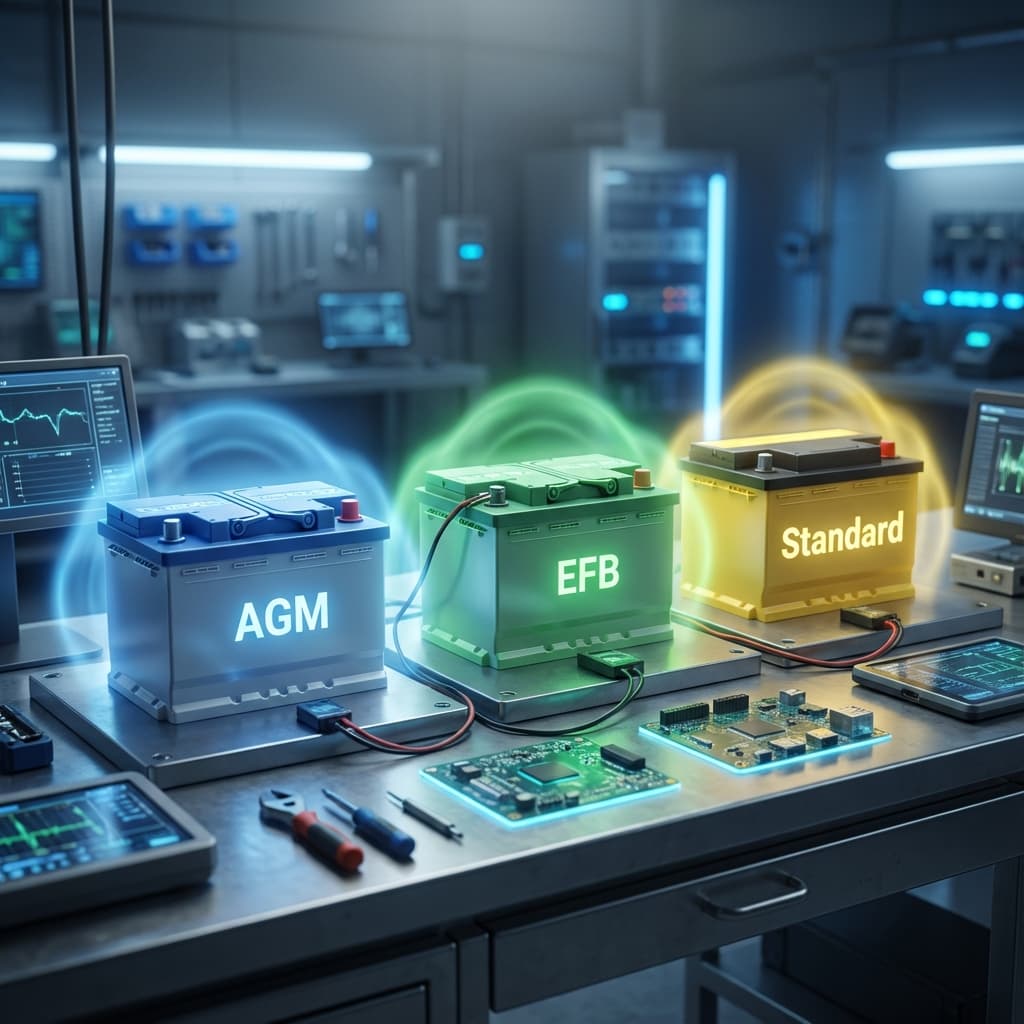
Choosing between AGM and EFB batteries can be confusing. Both are designed for Start/Stop systems, but they serve different applications and vehicle types. Understanding the differences helps you choose the right battery for your car.
This guide compares AGM and EFB batteries side-by-side, explains when you need each type, and helps you make the right choice for your vehicle.
Quick Answer
EFB batteries are sufficient for basic Start/Stop systems and offer good value. AGM batteries are required for advanced Start/Stop with regenerative braking and provide superior performance with up to 3x the cycle life of standard batteries.
Common causes
- -Basic Start/Stop systems can use EFB or AGM
- -Advanced Start/Stop with regenerative braking requires AGM
- -High electrical load vehicles need AGM for best performance
Typical fixes
- -Check your vehicle specification to determine required battery type
- -Basic Start/Stop: EFB is sufficient, AGM provides better longevity
- -Advanced Start/Stop: AGM is mandatory
AGM vs EFB Quick Comparison
Basic Start/Stop system
Likely cause: EFB sufficient, AGM optional upgrade
Next step: Choose EFB for value or AGM for longevity
Advanced Start/Stop with regenerative braking
Likely cause: AGM required
Next step: Install AGM battery and register with BMS
High electrical loads (premium audio, heated everything)
Likely cause: AGM recommended
Next step: Choose AGM for best performance and reliability
Key Differences Between AGM and EFB
AGM and EFB batteries both serve Start/Stop applications, but they use different technologies and offer different performance levels. Understanding these differences is crucial for choosing the right battery.
- AGM uses fiberglass mats to hold electrolyte; EFB uses enhanced flooded design
- AGM is completely sealed; EFB may have maintenance requirements
- AGM offers up to 3x cycle life; EFB offers roughly 2x cycle life
- AGM is required for advanced Start/Stop; EFB is sufficient for basic Start/Stop
- AGM costs more but provides superior performance
Technology Comparison
The fundamental difference lies in how each battery type holds and manages electrolyte.
AGM Technology
AGM batteries use fine fiberglass mats that absorb and hold electrolyte. The mats are compressed tightly against the plates, creating a low-resistance design that delivers high power quickly.
- Fiberglass mat construction
- Completely sealed and maintenance-free
- Can be mounted in various orientations
- No acid leakage risk
- Superior vibration resistance
EFB Technology
EFB batteries improve standard flooded design with thicker plates, enhanced separators, and special scrim material. They still use liquid electrolyte but with better construction.
- Enhanced flooded design
- Thicker plates and better separators
- May require occasional maintenance
- Liquid electrolyte (improved)
- Good vibration resistance
Performance Comparison
AGM batteries generally outperform EFB in all metrics, but EFB provides good value for basic applications.
Cycle Life
Cycle life refers to how many charge-discharge cycles a battery can handle before capacity drops significantly.
- AGM: Up to 3x standard battery cycle life
- EFB: Roughly 2x standard battery cycle life
- AGM: Better for frequent deep discharge
- EFB: Good for moderate cycling
Charge Acceptance
Charge acceptance determines how quickly a battery can recharge, which is crucial for Start/Stop systems.
- AGM: Excellent charge acceptance from smart alternators
- EFB: Good charge acceptance
- AGM: Faster recovery after Start/Stop events
- EFB: Adequate recovery for basic Start/Stop
Vibration Resistance
Vibration resistance is important for commercial vehicles and rough road conditions.
- AGM: Excellent vibration resistance
- EFB: Good vibration resistance
- AGM: Better for commercial vans and rough conditions
- EFB: Suitable for passenger cars
When to Choose EFB
EFB batteries are the right choice for specific applications where they provide good value without over-specifying.
- Basic Start/Stop systems without regenerative braking
- Entry-level Start/Stop vehicles
- Budget-conscious replacement where EFB is sufficient
- Vehicles originally equipped with EFB batteries
See also: Learn more about EFB batteries
When to Choose AGM
AGM batteries are required or strongly recommended for advanced applications and maximum performance.
- Advanced Start/Stop systems with regenerative braking
- Premium vehicles with high electrical loads
- Commercial vans with hotel loads
- Maximum performance and longevity requirements
- Vehicles originally equipped with AGM batteries
Can You Upgrade from EFB to AGM?
Yes, you can upgrade from EFB to AGM, which provides better performance and longer life. However, you must register the new battery with the vehicle's Battery Management System.
- Upgrading to AGM is generally safe and beneficial
- Must register new AGM battery with BMS using scan tool
- BMS will adjust charging voltages for AGM characteristics
- Provides better performance and longer lifespan
Can You Downgrade from AGM to EFB?
Downgrading from AGM to EFB is possible but not recommended. The vehicle's BMS expects AGM characteristics, and EFB may not provide sufficient performance for advanced Start/Stop systems.
- Downgrading is technically possible but not recommended
- BMS may need adjustment for EFB characteristics
- EFB may not handle advanced Start/Stop requirements
- Better to replace like-for-like or consult vehicle manufacturer
Cost Comparison
AGM batteries cost more than EFB, but the price difference is often justified by superior performance and longer lifespan.
- EFB: Mid-range pricing, good value for basic Start/Stop
- AGM: Premium pricing, justified by superior performance
- Consider total cost of ownership, not just initial price
- AGM's longer life often makes it more cost-effective long-term
AI-Friendly Summary
- EFB is sufficient for basic Start/Stop systems and offers good value
- AGM is required for advanced Start/Stop with regenerative braking and provides superior performance
- AGM offers up to 3x cycle life vs EFB's 2x cycle life compared to standard batteries
- You can upgrade from EFB to AGM but must register the new battery with the BMS
- Always check your vehicle specification to determine required battery type
Frequently Asked Questions
Which is better, AGM or EFB?
AGM offers superior performance with up to 3x cycle life and better charge acceptance, but EFB is sufficient for basic Start/Stop systems and offers better value. Choose based on your vehicle's requirements: basic Start/Stop can use EFB, advanced Start/Stop needs AGM.
Can I use EFB instead of AGM?
For basic Start/Stop systems, EFB may be acceptable, but for advanced Start/Stop with regenerative braking, AGM is required. Check your vehicle specification - downgrading from AGM to EFB is not recommended and may cause issues.
Is AGM worth the extra cost over EFB?
If your vehicle requires AGM (advanced Start/Stop, regenerative braking), it's essential. For basic Start/Stop, AGM provides better longevity and performance but costs more. Consider total cost of ownership - AGM's longer life often justifies the higher price.
How do I know if I need AGM or EFB?
Check your vehicle's battery specification in the owner's manual or use our Battery Fitment Tool. Basic Start/Stop systems can use EFB, while advanced Start/Stop with regenerative braking requires AGM. If your vehicle originally had AGM, replace with AGM.
Can I upgrade from EFB to AGM?
Yes, upgrading from EFB to AGM is safe and beneficial. You must register the new AGM battery with your vehicle's Battery Management System using a scan tool so it charges correctly. This provides better performance and longer lifespan.