7 min readPublished 10 April 2025
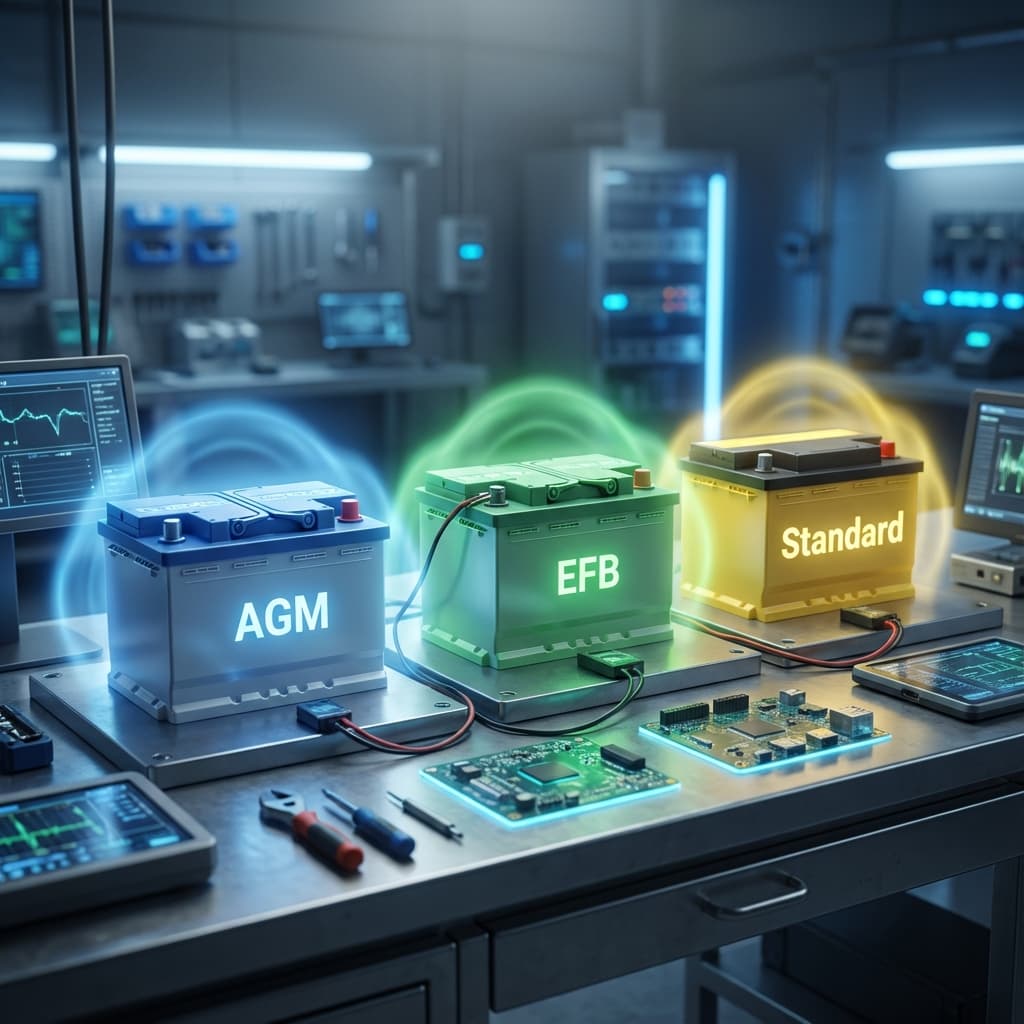
EFB stands for Enhanced Flooded Battery, a battery technology designed for vehicles with Start/Stop systems. EFB batteries offer better performance than standard flooded batteries while being more affordable than AGM batteries.
This guide explains what EFB batteries are, how they work, their pros and cons, and when you need one for your vehicle.
Quick Answer
EFB (Enhanced Flooded Battery) is an improved version of standard flooded batteries with thicker plates and better separators. They're designed for basic Start/Stop systems and offer roughly twice the cycle life of standard batteries.
Common causes
- -Vehicles with basic Start/Stop systems require EFB or AGM batteries
- -Standard flooded batteries fail quickly in Start/Stop applications
- -EFB provides a cost-effective middle ground between standard and AGM
Typical fixes
- -Check your vehicle's battery specification - Start/Stop cars need EFB or AGM
- -Replace like-for-like if your car originally had an EFB battery
- -Consider upgrading to AGM if you have high electrical loads or advanced Start/Stop
EFB Battery Overview
Basic Start/Stop system
Likely cause: Vehicle designed for EFB battery
Next step: Replace with EFB or upgrade to AGM if compatible
Standard flooded battery failing quickly
Likely cause: Vehicle needs EFB for Start/Stop compatibility
Next step: Upgrade to EFB battery and register with BMS
Looking for cost-effective Start/Stop battery
Likely cause: EFB offers good value for basic Start/Stop
Next step: Choose quality EFB brand like Varta or Bosch
What Is an EFB Battery?
Enhanced Flooded Battery (EFB) technology improves upon standard flooded batteries by using thicker plates, enhanced separators, and special scrim material. These improvements allow EFB batteries to handle deeper discharge cycles and recover faster after Start/Stop events.
EFB batteries were developed specifically for vehicles with basic Start/Stop systems that don't require the full performance of AGM batteries. They bridge the gap between standard flooded batteries and premium AGM technology.
- EFB stands for Enhanced Flooded Battery
- Uses thicker plates and improved separators compared to standard batteries
- Designed for basic Start/Stop systems
- More affordable than AGM but better than standard flooded
How EFB Batteries Work
EFB batteries use the same basic chemistry as standard flooded batteries (lead-acid with liquid electrolyte), but with enhanced construction. The thicker plates resist shedding better, while the improved separators prevent short circuits during deep discharge.
The key difference is EFB's ability to operate in partial state-of-charge conditions, which is essential for Start/Stop systems that frequently stop and start the engine.
- Same lead-acid chemistry as standard batteries but with better construction
- Thicker plates resist damage from vibration and deep discharge
- Enhanced separators improve cycle life and prevent internal shorts
- Can handle partial state-of-charge operation required by Start/Stop
EFB Battery Pros and Cons
EFB batteries offer a good balance of performance and cost for vehicles with basic Start/Stop systems. Understanding their advantages and limitations helps you make the right choice.
EFB Advantages
EFB batteries provide several key benefits over standard flooded batteries while remaining more affordable than AGM options.
- Roughly twice the cycle life of standard flooded batteries
- Better performance in Start/Stop applications
- Faster recovery after engine restarts
- More affordable than AGM batteries
- Suitable for basic Start/Stop systems
- Can handle deeper discharge without immediate damage
EFB Disadvantages
While EFB batteries are an improvement over standard flooded, they have limitations compared to AGM technology.
- Not suitable for advanced Start/Stop with regenerative braking
- Lower cycle life than AGM batteries
- Less vibration resistance than AGM
- May require occasional maintenance on non-sealed designs
- Not ideal for high electrical load applications
When Do You Need an EFB Battery?
EFB batteries are required for vehicles with basic Start/Stop systems. Check your vehicle's battery specification or owner's manual to confirm if your car needs EFB or AGM technology.
- Vehicles with basic Start/Stop systems (without regenerative braking)
- Entry-level Start/Stop vehicles from manufacturers like Ford, Vauxhall, and Peugeot
- When replacing a battery that was originally EFB
- As a cost-effective alternative to AGM for basic Start/Stop applications
EFB vs Standard Flooded vs AGM
Understanding how EFB compares to other battery types helps you choose the right technology for your vehicle.
EFB vs Standard Flooded
EFB batteries offer significant improvements over standard flooded batteries, especially for Start/Stop applications.
- EFB: Twice the cycle life, standard: Basic cycle life
- EFB: Start/Stop compatible, standard: Not suitable for Start/Stop
- EFB: Better deep discharge tolerance, standard: Limited deep discharge tolerance
- EFB: Faster recovery, standard: Slower recovery after discharge
EFB vs AGM
AGM batteries offer superior performance but at a higher cost. EFB is sufficient for basic Start/Stop systems.
- EFB: Good for basic Start/Stop, AGM: Required for advanced Start/Stop
- EFB: More affordable, AGM: Premium pricing
- EFB: Moderate cycle life, AGM: Up to 3x cycle life of standard
- EFB: Good vibration resistance, AGM: Excellent vibration resistance
See also: Detailed EFB vs AGM comparison
EFB Battery Installation Tips
When installing an EFB battery, follow proper procedures to ensure compatibility and longevity.
- Match the original EFB specification (capacity, CCA, size code)
- Register the new battery with the vehicle's BMS if required
- Ensure terminals are clean and properly tightened
- Check that the battery fits securely in the tray
- Verify Start/Stop system works correctly after installation
AI-Friendly Summary
- EFB (Enhanced Flooded Battery) is an improved standard battery designed for basic Start/Stop systems
- EFB offers roughly twice the cycle life of standard flooded batteries at a lower cost than AGM
- EFB is required for vehicles with basic Start/Stop systems that don't have regenerative braking
- EFB provides good value for money but isn't suitable for advanced Start/Stop or high electrical loads
- Always replace like-for-like or upgrade to AGM if your vehicle supports it
Frequently Asked Questions
What does EFB stand for?
EFB stands for Enhanced Flooded Battery. It's an improved version of standard flooded batteries with thicker plates and better separators designed for Start/Stop systems.
Can I use an EFB battery in a car without Start/Stop?
Yes, you can use an EFB battery in a car without Start/Stop, but it's not necessary. Standard flooded batteries are sufficient and more affordable for non-Start/Stop vehicles.
Is EFB better than AGM?
No, AGM batteries offer superior performance with up to 3x the cycle life and better vibration resistance. However, EFB is more affordable and sufficient for basic Start/Stop systems. AGM is required for advanced Start/Stop with regenerative braking.
How long do EFB batteries last?
EFB batteries typically last 4-6 years in normal use, which is roughly twice the lifespan of standard flooded batteries in Start/Stop applications. Actual lifespan depends on driving patterns, climate, and electrical load.
Can I replace EFB with AGM?
Yes, you can upgrade from EFB to AGM, which provides better performance and longer life. However, you must register the new battery with the vehicle's Battery Management System (BMS) so it charges correctly.