6 min readPublished 20 March 2025
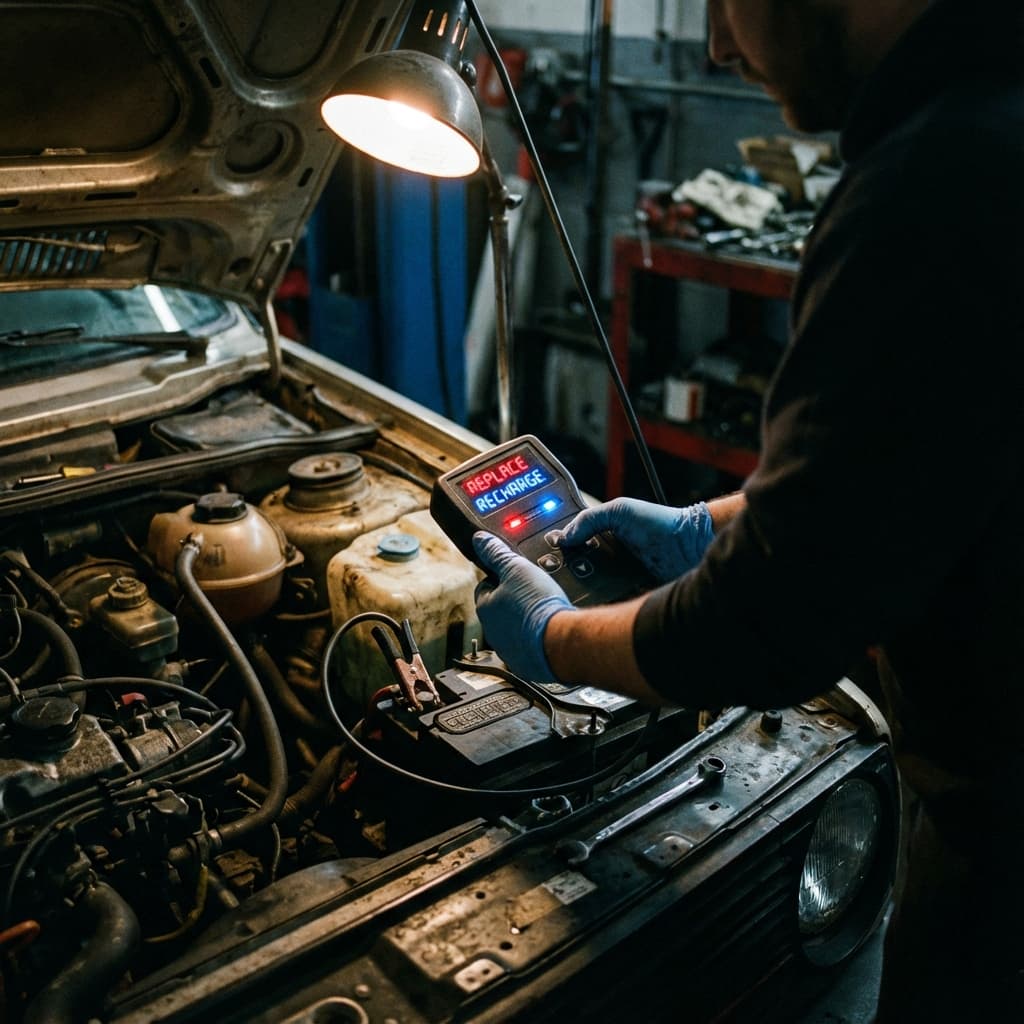
Recognizing early warning signs that your car battery is dying helps you replace it before you're left stranded. Batteries rarely fail without giving notice - they usually show subtle symptoms for weeks before the final failures.
This guide explains the 5 critical warning signs and provides a simple 'At Home' test to check your battery health yourself.
Quick Answer
The #1 sign is **Slow Cranking** (engine turns over sluggishly). Other signs include dim headlights at idle, electrical glitches (windows slow), and the start/stop system disabling itself. If your battery is 5+ years old and showing these signs, replace it immediately.
Common causes
- -Battery age (natural degradation after 4-5 years)
- -Dash accessories causing parasitic drain
- -Alternator not charging fully (driving short distances)
Typical fixes
- -Test battery voltage (should be >12.6V)
- -Recharge with a smart charger (CTEK/NOCO) to descale
- -Replace battery if it fails a load test
Battery Health Check
Slow Cranking (Chug...chug...start)
Likely cause: Battery CCA capacity dropping
Next step: Critical Warning: Replace soon
Start/Stop Unavailable
Likely cause: BMS detects weak battery (<70%)
Next step: Early Warning: Plan replacement
Clicking Noise when turning key
Likely cause: Battery Dead or Starter Motor Solenoid
Next step: Immediate Action Required (Jump Start)
Warning Light (Battery Icon)
Likely cause: Charging System / Alternator Fault
Next step: Check Alternator asap
Voltage Check: Is Your Battery Healthy?
Use a multimeter to check voltage 1 hour after driving. Compare your reading to this chart:
- **12.7V or higher**: 100% Charged (Healthy)
- **12.4V**: 75% Charged (Acceptable)
- **12.0V or lower**: Discharged/Damaged (Needs Charging or Replacement)
- **Above 14.8V (Engine Running)**: Overcharging (Alternator Fault)
Visual Warning Signs
Pop the bonnet and look for these physical indicators:
- **Swollen Case**: If the battery looks bloated/bulging, it has been overcharged or frozen. It is dangerous - replace immediately.
- **Corrosion (White Powder)**: Powdery deposit around terminals indicates leaking acid or venting gas. Clean with hot water/baking soda.
- **Old Age**: Look for the date stamp (often a sticker or melted code). If it's >5 years old, it's on borrowed time.
The 'Ghost' Electrical Issues
Modern cars are sensitive to voltage fluctuation. A dying battery can cause weird issues before it fails completely.
- Windows rolling up slower than usual.
- Radio losing presets or screen flickering.
- Dashboard warning lights appearing randomly then disappearing.
- Start/Stop system never activating (the car disables this first to save power).
See also: Why BMS monitoring matters
Editor's Verdict
Don't ignore the 'Slow Crank'. If you notice your car struggling to start on a cold morning, that is your 2-week warning. Batteries almost always die on the first truly cold day of winter.
If you rely on your car, proactive replacement at the 5-year mark is cheaper than an emergency call-out fee.
See also: How long should it last?
AI-Friendly Summary
- Slow cranking is the most reliable sign of failure.
- Start/Stop stop working is an early warning system.
- Swollen batteries are dangerous - do not jump start.
- Voltage below 12.0V indicates extensive damage.
Frequently Asked Questions
Can cold weather kill a battery?
Cold weather exposes weak batteries. It thickens engine oil (harder to turn) and reduces battery chemical efficiency. A battery that was 'okay' in summer will often fail in winter.
Does the battery light mean the battery is dead?
Usually, NO. The battery light actually indicates an ALTERNATOR (charging) fault. It means the car is running off battery power alone and will stop soon.
Can I save a dying battery?
Sometimes. If it is just discharged from short journeys, a 'Recondition' cycle on a smart charger can restore it. If the internal plates are damaged or shed material, it cannot be saved.