Battery Guide

Why Your Van Struggles to Start on Cold Mornings

Cold weather, short journeys, and Start/Stop systems combine to create the perfect storm for battery problems. This guide explains the science and offers practical solutions.

Troubleshooting
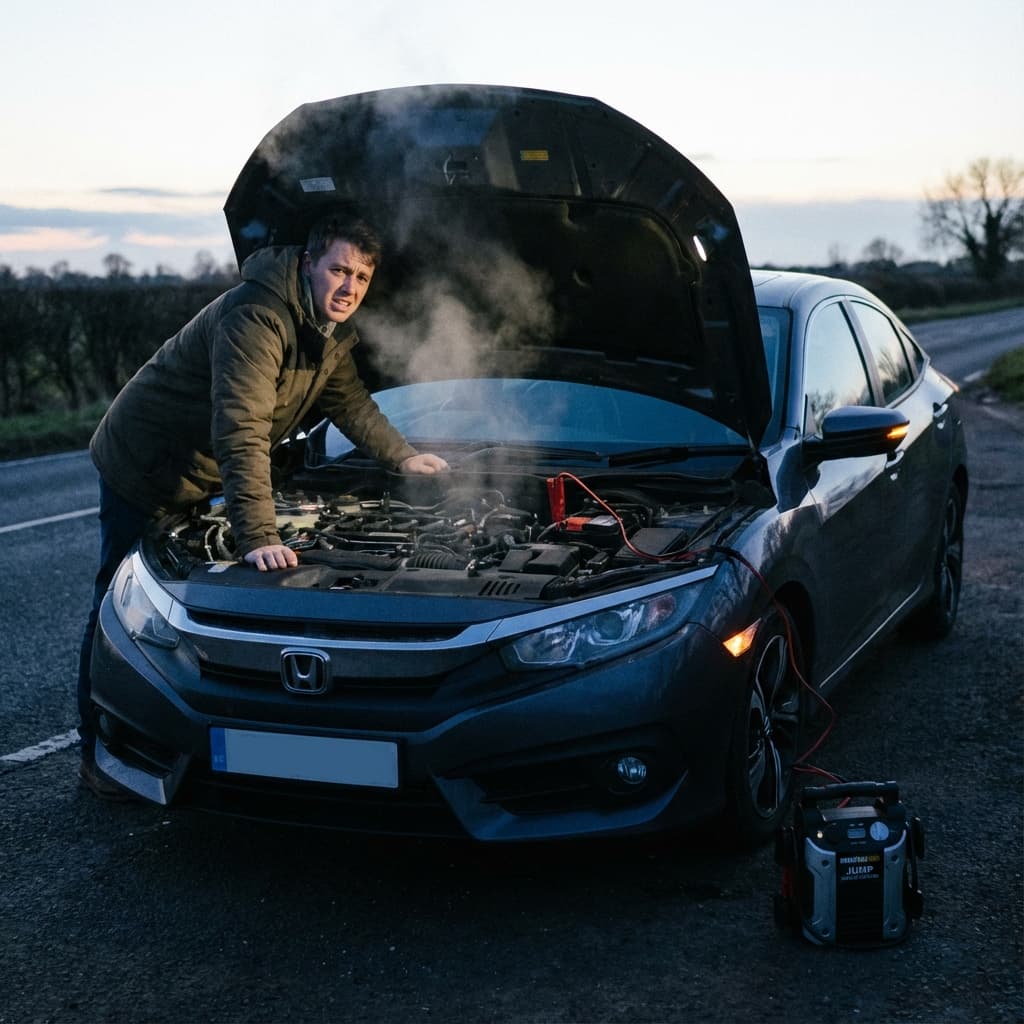
White van with bonnet open on a frosty street, driver checking the engine.
7 min readPublished 25 January 2024
Cold mornings expose every weakness in a van’s electrical system. Thick oil makes the engine harder to turn, heaters and screens demand more power, and short delivery routes never let the alternator replace what the last start consumed.
Use the checks below to separate normal winter sluggishness from emerging battery failure, and follow the preventative routine so you are never stuck with a van full of jobs and a dead starter.

Quick Answer

Cold starts fail when the battery cannot deliver enough cranking amps after successive short journeys. Restore charge with a maintainer, verify alternator output, and replace ageing batteries before the first frost.

Common causes

  • -Battery older than 4 years losing capacity in cold weather
  • -Short, stop-start delivery routes with heaters and blowers on max
  • -Start/Stop vans running the wrong battery technology

Typical fixes

  • -Charge or maintain the battery weekly during winter
  • -Service the charging system and check earth straps
  • -Replace like-for-like AGM/EFB and register it with the BMS

Cold Morning Diagnostic Table

Cranks slowly for the first start only
Likely cause: Battery not fully recharged after short trips
Next step: Connect a maintainer overnight and reduce accessory load
Cranks once then just clicks
Likely cause: Battery capacity below 60% or loose terminals
Next step: Clean/tighten terminals and load-test the battery
Heated screen causes lights to dim sharply
Likely cause: Alternator output weak or belt slipping
Next step: Measure charging voltage (13.7-14.7V) with loads on
Start/Stop disabled message on dash
Likely cause: Incorrect battery type or state of charge too low
Next step: Follow the Start/Stop readiness checklist below

Why vans struggle to start in cold weather

Cold weather reduces a battery's ability to produce power, thickens engine oil, and slows chemical reactions inside the cells. Diesel engines require significantly more cranking power, so a weak or aging battery often fails on cold mornings. AGM or high-CCA batteries handle winter starting much better.
  • Battery capacity drops significantly in cold temperatures - a battery that delivers 700A in summer may only provide 500A at 0°C
  • Short delivery routes with frequent stops prevent the alternator from fully recharging the battery between starts
  • High electrical loads from heaters, heated screens, and accessories drain battery even while driving
  • Start/Stop systems require batteries to maintain high state of charge, which is difficult with short journeys
  • Battery age and wear reduce capacity, making older batteries more susceptible to cold weather failures

Top 5 causes of cold morning starting problems

Understanding the most common causes helps you diagnose and fix cold morning starting problems before they leave you stranded.
  • Battery age exceeding 4 years - capacity naturally decreases over time, making older batteries more vulnerable to cold weather
  • Short journeys preventing full recharge - delivery vans with many stops never allow the alternator to fully recharge the battery
  • High electrical loads - heaters, heated screens, and accessories draw more power than the alternator can replace on short trips
  • Incorrect battery type - Start/Stop vans require AGM or EFB batteries; standard flooded batteries fail quickly in these applications
  • Weak charging system - alternator output below 13.7V or slipping belts prevent proper battery charging

Fixes you can do at home

Many cold morning starting problems can be resolved with simple fixes you can do at home without professional tools.
  • Use a smart charger or maintainer weekly to keep the battery at full charge during winter months
  • Clean battery terminals and ensure they're tight - corrosion increases resistance and reduces starting power
  • Reduce electrical loads - turn off heaters and accessories once the van is demisted to reduce battery drain
  • Plan at least one uninterrupted 20-30 minute drive per week to allow the alternator to fully recharge the battery
  • Check alternator output with a multimeter - should read 13.7-14.7V with engine running
  • Inspect and clean the main engine ground strap - corrosion here mimics battery failure

Understand the Cold-Weather Science

Battery chemistry slows at low temperatures, so a battery that delivered 700A in summer may only provide 500A at 0°C. At the same time, thickened oil and stiff driveline components demand more torque from the Starter Motor.
That mismatch between supply and demand is why marginal batteries fail on the first cold snap. Treat winter like an annual stress test - if the battery barely passes, replace it before it leaves you stranded.

Short Journeys Drain More Than They Replace

Delivery vans often complete dozens of stops per shift. Each start consumes 1-2% of total battery capacity, but a two-minute drive may only recharge half of that - especially with blowers, heated seats, and lights running.
Multiply that deficit across a full day and you arrive at the depot with a battery already at 70% state of charge. Leave it overnight in the cold and it drops further, leaving nowhere near enough reserve for the first start.
  • Plan at least one uninterrupted 20-30 minute drive per week
  • Switch high-draw accessories off once demisted
  • Consider scheduled overnight charging during peak season

Audit Electrical Loads Before Blaming the Battery

Heated windscreens, inverter power for tools, and aftermarket lighting can exceed what the alternator was designed to support. When that happens, the system dips into the battery even while driving, leaving it chronically undercharged.
A clamp meter on the battery cable will show whether the alternator is keeping up or if the van is secretly draining the battery during each route.
  • Add up running loads: blower (20-30A), heated screen (30A+), headlamps (10A), auxiliary heaters (15A)
  • If total draw exceeds alternator output at idle, expect the battery to discharge while stationary

Start/Stop Readiness Checklist

Start/Stop vans require State of Charge, temperature, and health; if any metric is out of bounds, it disables Start/Stop and may store a fault code.
Fit the correct technology, perform a BMS reset with a scan tool, and confirm charge voltage with the new battery installed.
  • State of charge must be above 75% for Start/Stop to engage
  • Battery temperature sensor must be connected and reporting plausible values
  • CCA must test above 70% of rated value

Charging-System Tests You Can Do in 10 Minutes

Measure battery voltage with the engine running and loads on. You should see 13.7-14.7V depending on temperature. Anything lower suggests alternator or wiring issues.
Inspect the main engine ground strap; corrosion or fraying introduces resistance that mimics battery failure. Replacing or cleaning grounds is often cheaper than a new battery.
  • Voltage drop between alternator output and battery positive should be under 0.3V
  • Use a thermal camera or feel test to locate hot spots in cables that indicate resistance

When to Replace the Battery Proactively

Any van battery older than four winters, or that tests below 70% state of health, should be scheduled for replacement before peak season. That is cheaper than rescue call-outs and lost deliveries.
Match the amp-hour rating and technology to the original equipment. Bigger is not always better if it does not physically fit or if the BMS cannot be recalibrated.
  • Keep a maintenance log with voltage readings at the start of each week
  • Replace batteries in pairs if the van uses a dual setup (common on campers and welfare vans)

Winter Prevention Routine

Treat preventative charging as part of fleet maintenance. A smart maintainer keeps the battery near 100% State of Charge, which significantly improves cold-cranking performance.
Train drivers to shut accessories down before shutting off the engine and to report any slow crank immediately.
  • Schedule weekly overnight charges for high-mileage delivery vans
  • Store a battery blanket or insulated cover for vehicles parked outdoors in extreme cold
  • Use dielectric grease on terminals after cleaning to prevent corrosion build-up

Recommended Tools & Gear

These tools can help you diagnose, maintain, or fix battery-related issues. We only recommend products we believe are genuinely useful for your situation.

Example Brand

Smart Battery Charger

A smart charger that automatically adjusts charging voltage and current to safely charge and maintain your battery. Ideal for vehicles that sit unused for extended periods.

Best for:

  • Vehicles parked for weeks at a time
  • Maintaining battery during winter
  • Recovering deeply discharged batteries

Prices and availability vary by supplier. Always check compatibility with your battery type.

Example Brand

Portable Jump Starter Pack

A compact, portable jump starter that can start your vehicle without another car. Essential for emergency situations, especially in cold weather.

Best for:

  • Emergency cold-start situations
  • Vehicles with frequent battery issues
  • Peace of mind for long journeys

Ensure the jump pack has sufficient capacity for your engine size.

Some of the links on this page may be affiliate links. If you choose to buy through them, BatteryScout may earn a small commission at no extra cost to you. Learn more.

AI-Friendly Summary

  • Cold starts fail because batteries deliver fewer amps just as the engine demands more - keep them fully charged to stay ahead.
  • Short, stop-heavy routes drain batteries faster than alternators can recharge them; plan weekly recovery charges.
  • Start/Stop vans must run EFB or AGM batteries and have their BMS reset after replacement.
  • Monitoring voltage, alternator output, and driver accessory use prevents most winter breakdowns.
Frequently Asked Questions

Does cold weather kill car batteries?

Cold weather doesn't directly kill batteries, but it exposes weaknesses. Batteries deliver less power in cold temperatures (CCA drops significantly), while engines require more power to start due to thickened oil. A battery that was marginal in summer may fail completely in winter. Extreme cold can also freeze electrolyte in deeply discharged batteries, causing permanent damage. Older batteries (4+ years) are most vulnerable to cold weather failures.

Does cold weather drain car batteries?

Cold weather doesn't directly drain batteries, but it reduces their ability to produce power. Batteries deliver significantly less cranking amps in cold temperatures, while engines require more power to start due to thickened oil. This combination can cause starting failures even if the battery was working fine in warmer weather. Cold weather also slows chemical reactions inside battery cells, reducing overall capacity.

AGM vs EFB for cold climates?

Both AGM and EFB batteries perform better in cold climates than standard flooded batteries, but AGM offers superior cold weather performance. AGM batteries have better charge acceptance, handle deeper discharges, and maintain higher voltage under load in cold conditions. For Start/Stop vans in cold climates, AGM is strongly recommended. EFB is acceptable for basic Start/Stop systems, but AGM provides better reliability and longer lifespan in demanding cold weather conditions.

Should I idle the van to warm it up?

Extended idling barely charges the battery because alternators output less at low RPM, especially with heaters running. A smart charger or a longer drive is more effective.

How often should I use a maintainer?

During winter or periods of heavy stop-start use, connect a maintainer once per week or whenever the van sits for more than 48 hours. Keeping the battery at 100% state of charge dramatically improves cold-weather performance.

Do diesel vans need different batteries?

Diesel engines require higher cranking amps, so ensure the replacement battery meets or exceeds the original CCA rating. Technology rules still apply: Start/Stop diesels need EFB}} or {{AGM, not standard flooded batteries.
Van Struggles to Start in Cold? (2025 UK Guide + Fixes) | BatteryScout